
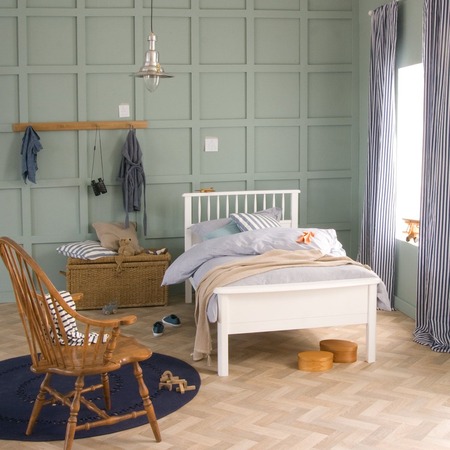
Moving your child into their first “big bed” is one of those milestone moments that feels both exciting and a little daunting. With so many styles, materials and trends to sift through, it helps to focus on the elements that truly make a difference - safety, longevity, and a design that will feel just as lovely in five years time, as it does today.
Below are the key things to consider when choosing a bed that supports your child now, and grows gracefully with them.
- Choose Solid Hardwoods for Strength and Longevity

When it comes to children’s furniture, the material matters. Solid hardwoods, such as sustainably sourced beech and oak, offer a level of strength and stability that softwoods simply can’t match.
Why hardwoods make such a difference:
- They’re naturally strong and durable, ideal for years of climbing, bouncing and every day use
- They age beautifully, resisting warping and wobbling
- They allow for traditional joinery, like mortice and tenon joints, which create a sturdier, safer frame
- They provide a high quality substrate for paint finishes, meaning no seeping of sap through the paints.
A solid hardwood bed is an investment in peace of mind. It’s the difference between a bed that lasts a childhood and one that lasts a generation.
- Prioritise Safety and Sturdiness Above All Else

Your child’s first bed should feel rock‑solid. Look for:
- Traditional joinery rather than bolts alone
- Thick, stable side rails
- A secure slatted hardwood mattress base
- Smooth finishes
- Rigorous safety testing
A well‑built bed doesn’t creak, sway or shift. It feels reassuring from the moment you place your hand on the frame, and that sense of security is exactly what helps children settle confidently into independent sleep.
- Consider a Low Foot End for a Calmer, More Spacious Feel

Low foot end beds are a quiet hero in children’s rooms. They:
- Create a sense of openness, especially in smaller spaces
- Make the bed easier for little legs to climb into
- Allow bedding to drape naturally
- Feel less enclosed, which can help children transition from a cot
They also pair beautifully with both modern and traditional interiors, making them a versatile choice for years to come.
- White Beds: A Timeless, Light‑Lifting Choice

There’s a reason white beds remain a favourite for children’s rooms. A soft, durable white finish:
- Brightens the room instantly
- Works with every colour palette, whether they are pastels, brights or neutrals
- Feels clean, calm and classic
- Ages gracefully as your child’s tastes evolve
A white hardwood bed is the perfect blank canvas for bedding, toys and personality to shine.
- Look for Timeless Design Over Trends

Children grow quickly, and so do their tastes. Choosing a bed with a timeless silhouette means:
- It won’t date
- It can adapt to changing décor
- It feels “grown up” enough to last into the tween and teen years
- It pairs effortlessly with future furniture additions
Think gentle curves, simple lines, and timeless design that feels quietly confident rather than themed or novelty‑led.
- Think About the Whole Room, Not Just the Bed
Your child’s first bed sets the tone for the entire space. A well‑chosen hardwood frame in a classic finish becomes the anchor for:
- Coordinating storage
- A future desk
- A reading nook
- Evolving colour schemes
Choosing something sturdy and timeless now gives you the freedom to build a room that grows with them, rather than one you need to replace in a few years.
Final Thoughts
Your child’s first bed is more than a piece of furniture; it’s a place where they’ll dream, grow, read, rest and feel safe. By focussing on solid hardwoods, safety, sturdiness, low foot ends, white finishes and timeless design, you’re choosing a bed that supports them beautifully at every stage.


Comments