
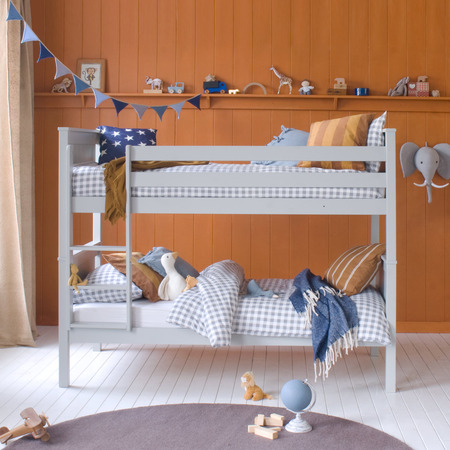
We are often asked by parents about the safety of bunk beds. – How do you know when your child is ready for a bunk? Why are some bunks more expensive than others? Are all bunk beds safe?
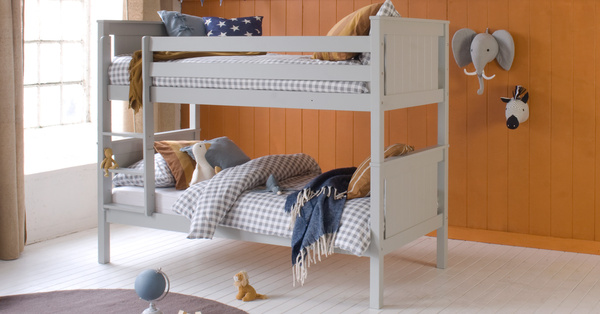
We have pulled together a short guide to help you with your decision making when it comes to finding a safe and sturdy bunk bed for your child:
Let’s start by saying that bunk beds can generally be considered safe, as long as they’re built to the British standard and used appropriately.
The key benchmark to look for is BS EN 747, which is the UK/European safety standard for bunk beds.
This standard covers a number of safety factors, which include:
- Guard‑rail height
- Maximum mattress depth
- Ladder strength and spacing
- Entrapment‑hazard testing
- Structural durability
Beds that meet this standard are considered safe when used correctly.
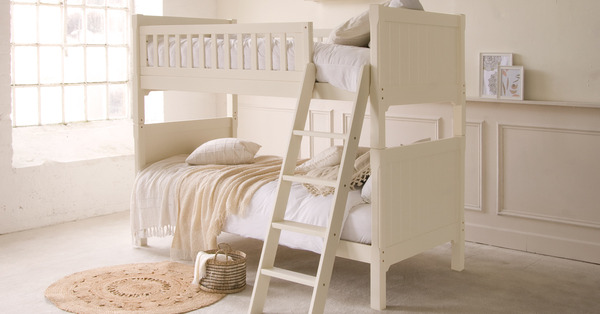
Here are some of the most important safety rules when it comes to bunk bed designs:
Top bunks are recommended for ages 6+ only
A child needs to be competent to climb and descent the top bunk safely and should be able to hold both sides for a careful climb. They need to feel confident with this. Consider things like physical capabilities, as well as how dark the room is.
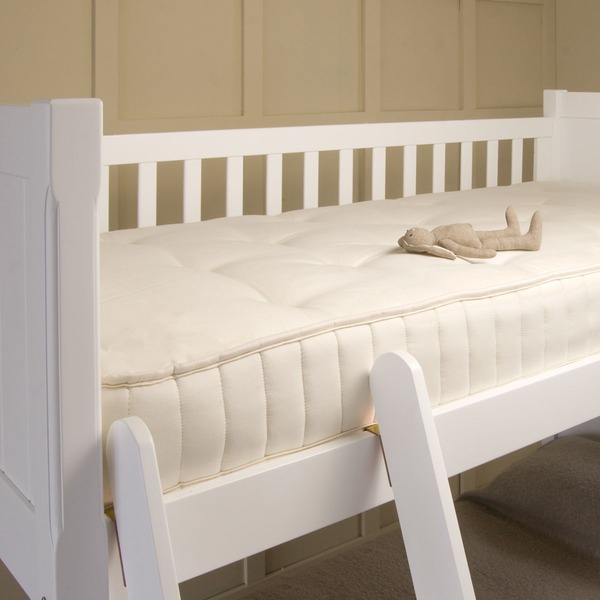
Guard rails must be high enough (and mattresses thin enough)
Rails must rise well above the mattress to prevent rolling.
A mattress that’s too deep can make the rail ineffective, and so we would only recommend a high bed safety mattress for all bunks and high sleeper beds. These are a maximum of 15cm thick. – When researching high bed mattresses, ensure that you find ones with all the specification of a regular mattress and avoid foam filled.
Ladders should be sturdy and easy to climb
Look for things such as:
The use of solid hardwood, non-slip steps
Secure fittings
Comfortable spacing
Younger children may prefer a pitched ladder for an easier climb
No gaps that could trap heads or limbs
There are strict legislations about the sizes of gaps when it comes to bunk bed design, and bunks that are designed to BS EN 747 will adhere to these, so it is important to check before buying.
Correct assembly is essential
Bunk‑bed accidents can come from incorrect assembly or loose fittings, rather than the design itself. It is important to follow instructions and always assemble correctly to the design, avoiding any modifications.
Seek out bunk beds that are designed with proper joints and solid hardwood frames. This minimizes the use of lots of fittings, as the strength comes from the materials, the designs themselves, and the way in which the bunk beds are manufactured.
Solid hardwood bunk bed frames strengthen safety
Look for bunk beds that are made with solid hardwoods and that have been tested to support adults as well as children.
Teach children how to use the bed safely
Children should avoid playing on the ladder, jumping from the top bunk and there should only be one person on the top bunk at a time.
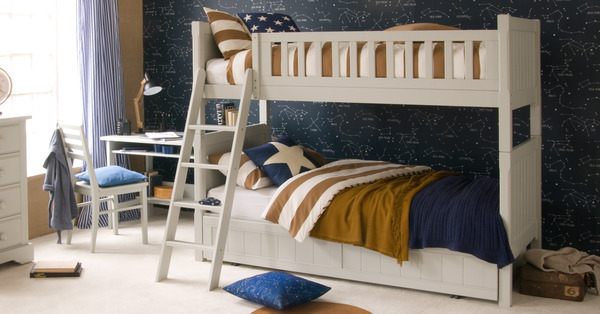
How to Choose a Safe Bunk Bed
Look for BS EN 747 certification
This is the gold standard for bunk‑bed safety in the UK.
Choose a reputable bunk bed design brand
It is important to buy bunk beds from brands that explicitly state compliance with UK safety standards.
Check mattress depth
Ensure that only high bed safety mattresses (up to 15cm thick) are used for upper bunk beds.
Prioritise solid materials
Hardwoods and high‑quality timber frames are more stable and durable than soft woods such as pine or panel materials – which simply may not be strong enough to perform over a longer time.
View our full range of BS EN 747 compliant bunk beds here.
Happy bunk bed buying! x


Comments